
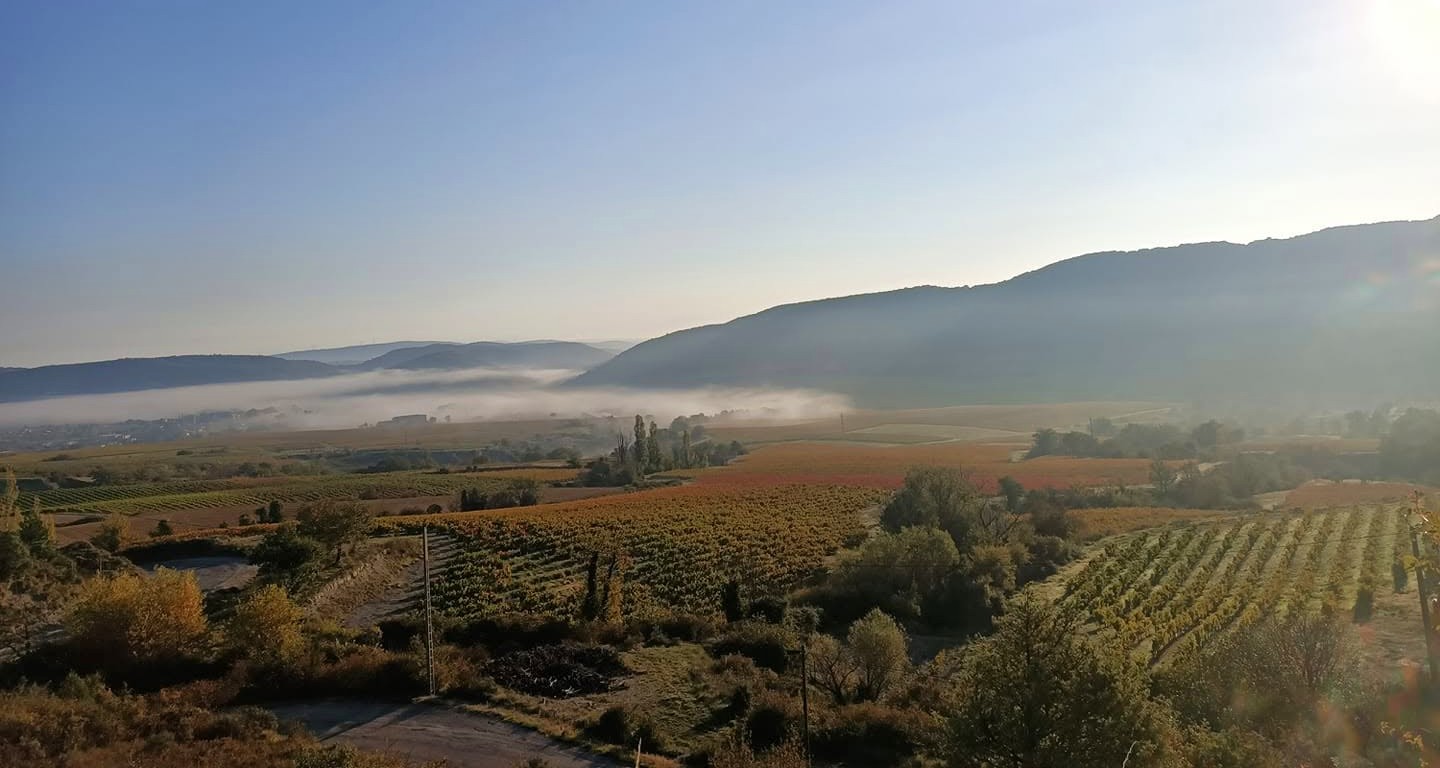
In the south of the Ardèche, the landscapes, villages and agricultural activity remain deeply shaped by viticulture and farming. Its history, natural features and recent developments on certain farms provide a clearer context for the development of our local hemp cultivation. A brief portrait of a unique terroir: Valvignères and the Dardaillon Valley, where ValviChanvre’s CBD is produced in the Ardèche.
Valvignères, a farming valley in the south of the Ardèche
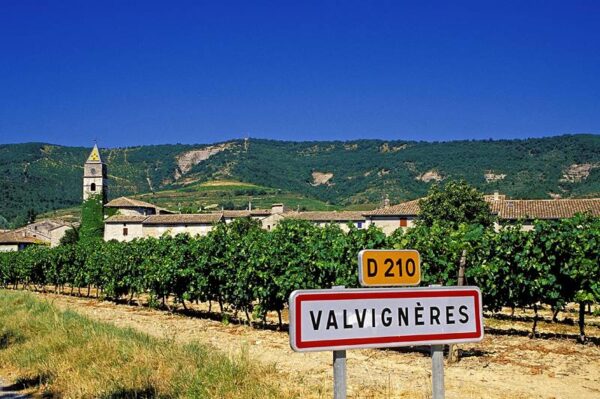
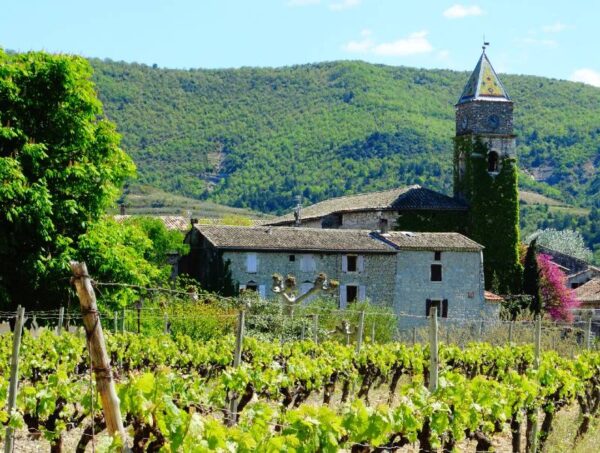
The ValviChanvre agricultural enterprise is situated in the commune of Valvignères, in southern Ardèche, within the historic region of Bas-Vivarais, near Alba-la-Romaine and Saint-Thomé, and close to Viviers in the Rhône Valley. The village stretches across a north-south-facing valley, flanked by hills and set apart from the most densely populated urban areas, in a rural setting where farmland occupies the valley floor and part of the hillsides. Vines still largely dominate the agricultural landscape, alongside a few plots of fruit trees, olive trees, lavender and other crops suited to the southern climate. The valley’s soils are mainly clay-limestone, with marl present in places – a geological composition characteristic of this part of the Ardèche.
The climate is strongly influenced by the Mediterranean, with generally hot, dry summers, plenty of sunshine for much of the year, and windy spells that mark the rhythm of the agricultural seasons. Rainfall consists of brief, intense downpours, particularly those brought by the Cévennes weather systems.
A history closely linked to viticulture since ancient times
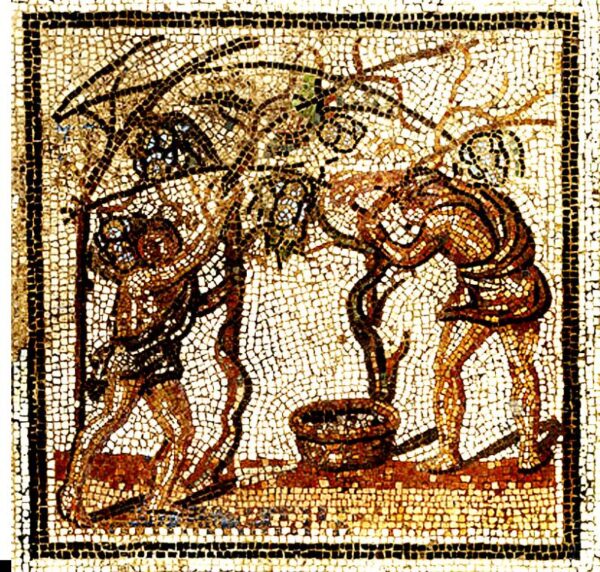
The name Valvignères is thought to derive from the Latin *Vallis Vinaria*, an expression generally translated as ‘valley of the vine’ or ‘wine-producing valley’. This etymology, considered likely by local historians, anchors the village’s wine-growing identity in a very ancient past. In ancient times, the area lay close to Alba, the capital of the Helvian* people, and viticulture was already practised in this part of the Ardèche during the Gallo-Roman period. Agricultural estates were established in the valley and planted with grape varieties whose quality was praised by certain ancient authors. The wines produced in the region were distributed beyond their place of origin, to Lyon, Rome and northern Europe, as part of the trade networks characteristic of the Roman period.
During the Middle Ages, wine-growing continued, and the valley’s wines were highly regarded in the religious and political circles centred around the diocese of Viviers. Vine-growing subsequently faced a series of crises, including the phylloxera epidemic of the 19th century, which devastated the vineyards, as it did in the vast majority of French wine-growing regions. The vines were replanted and wine-growing continued to shape local life. The establishment of the Valvignères cooperative winery in 1952 marked an important milestone in the collective organisation of wine production. It brought together winegrowers from the commune and the surrounding area under a shared enterprise that is still in operation today.
A village in the Ardèche whose heritage reflects its agricultural identity
Valvignères retains several traces of its medieval past, including sections of the ramparts and towers that once marked the boundaries of the village. The old houses provide a direct insight into the role of agriculture in the daily lives of the inhabitants. Several traditional dwellings, known as ‘winegrowers’ houses’, feature a cellar on the ground floor and living spaces on the upper floors – a layout that facilitated the storage of wine, harvests, tools and agricultural equipment in the coolest parts of the building. Some covered balconies, supported by stone pillars, are characteristic of the rural architecture of the Bas-Vivarais.
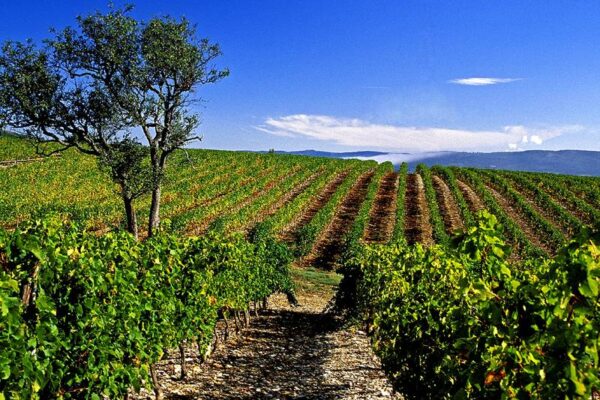
The Maison de Bonas is one of the village’s most remarkable buildings, not least because of an agreement signed between Catholics and Protestants in 1589, in the presence of Olivier de Serres. The Church of Saint-Symphorien completes this architectural heritage, which serves as a reminder of just how much working the land has influenced the architecture of the houses and the organisation of community life. This agricultural heritage is also evident in the surrounding countryside, where grape varieties such as Syrah, Grenache, Viognier and Chardonnay are grown. The enduring presence of vineyards does not prevent some local farms from simultaneously exploring new crops or other ways of adding value to their businesses.
When winemaking traditions embrace new crops
Wine-growing remains at the heart of agricultural activity in the village of Valvignères, but a few farms have developed complementary crops or activities.
The Domaine du Mazel grows lavender, the flowers of which are sent to a distillery in the Ardèche to extract essential oil. The Mas d’Intras has chosen to welcome passing visitors to accommodation on the farm, whilst offering a range of experiences centred on organic wine. These initiatives do not reflect a uniform trend across the region, but show that some winegrowers are seeking to make the most of their land, heritage or expertise in new ways.
As a winegrower on the family estate, Maxime Crozier is also part of this trend, this time choosing to diversify his crops directly. Since 2022, following several episodes of adverse weather that had weakened the vineyard, he has devoted part of his land to hemp for CBD and CBG, thus giving rise to Valvi Chanvre. This production complements his wine-growing business and extends his agricultural expertise into a different field, focused on wellbeing. As the ultimate mark of quality, he has chosen to commit to organic farming, with Ecocert certification.
What role does the Valvignères terroir play in the quality of Valvi Chanvre’s CBD?
Terroir is not simply a matter of soil type. It depends on the combined effect of the plots’ aspect, the duration of sunshine, temperatures, water availability, ambient humidity, air circulation and the farming practices adopted by the grower. Taken together, these factors determine the conditions under which a plant grows, from the germination stage right through to harvest.
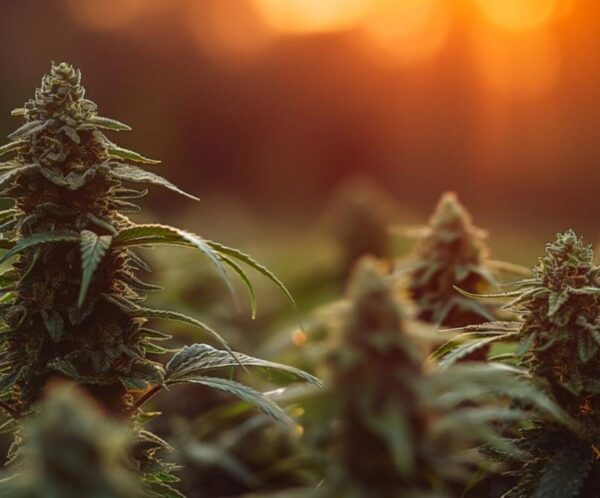
Outdoor cultivation subjects hemp plants to the natural rhythm of the seasons and the length of the day, two factors that influence their vegetative development. Light, temperature and water supply all play a part in the production of cannabinoids and terpenes, although their effects vary depending on the variety and the climatic conditions of each year. It is a delicate balance that requires agricultural expertise and an excellent understanding of this unique terroir, built up over the years through working the land, in order to adapt to the vagaries of the weather, meet the plant’s needs and guarantee a high-quality harvest for the consumer.

In Valvignères, several factors help to create a suitable environment for outdoor hemp cultivation, including:
- Abundant sunshine, estimated at around 2,600 hours a year;
- a relatively dry Mediterranean climate, which limits periods of persistent dampness around the flowers;
- periods of windy weather that promote air circulation and help the foliage to dry out after dew or rainfall;
- clay-limestone and marl soils, in which the clay fraction can retain some of the water it absorbs, before gradually releasing it to the roots during dry periods.
This combination of high levels of sunlight, generally dry air and soil capable of retaining a certain amount of moisture offers an advantage over less sunny or persistently damp areas; and, much like the vineyard, makes the Dardaillon Valley a terroir well-suited to cannabis and provides the plants with a favourable environment. As for the high CBD content and the superior quality of the harvested flowers, these also depend on the carefully selected varieties, the management of irrigation and the meticulous attention paid to the various post-harvest operations to ensure optimal drying and storage.
ValviWeb+
- The Helvians, Wikipedia ↗
- The CBD shop, direct access
- Valvignères Cooperative Winery