
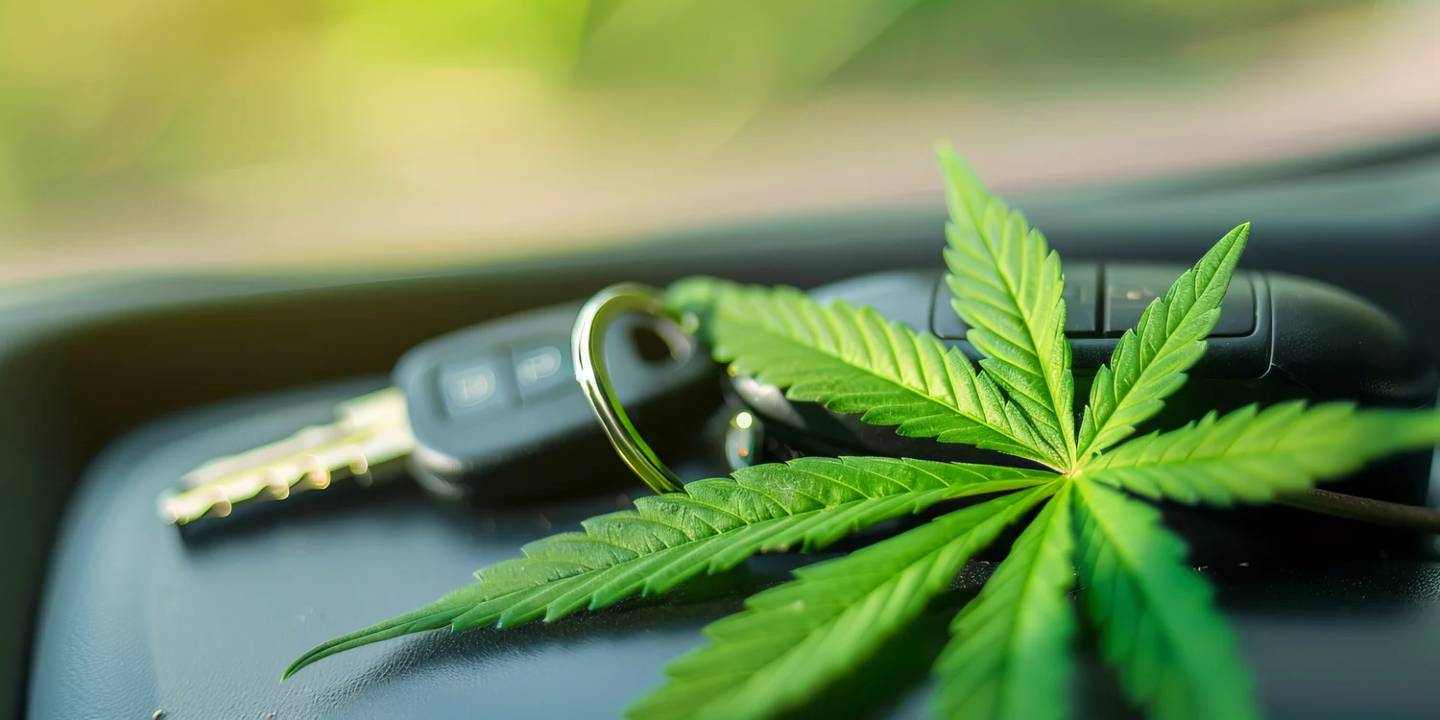
The consumption of legal CBD in France exposes users to a real legal risk during roadside tests, and this reality remains largely underestimated by motorists, who may legitimately believe they are in the clear by purchasing products that comply with the regulations. The presence of THC can lead to a charge being brought, even when the THC comes from a legal CBD product and even when the amount detected is very small. If you use CBD and drive regularly, having a clear understanding of how a roadside check is conducted, your rights and the mistakes to avoid whilst pulled over is the best way to ensure you do not unnecessarily make your situation worse.

Legal CBD and saliva tests: a very real legal paradox
In 2026, in France, a product purchased legally in a shop could expose an unwary consumer to a traffic offence with inevitably serious consequences.
Why the saliva test makes no difference
The saliva test used during roadside checks detects the presence of THC in saliva, not CBD. However, legal CBD products sold in France may contain up to 0.3 per cent THC, in accordance with the decree of 30 December 2021. This trace of THC, however minute, is sufficient to cause the test to return a positive result. The origin of this THC – whether it comes from a legal product or not – is of no consequence in the eyes of the courts following the ruling of the Court of Cassation on 21 June 2023: the fact that the THC may potentially come from a legal CBD product is therefore not sufficient to automatically rule out the offence.
What will French law say in 2026?
Article L235-1 of the Highway Code imposes penalties on any person who drives whilst a test confirms the presence of narcotics in their system. Since 11 July 2025, driving after taking drugs has been punishable by three years’ imprisonment and a fine of €9,000 for a first offence involving drugs alone. These provisions remain in force in September 2026. Where the offence is committed in conjunction with alcohol, the penalties rise to five years’ imprisonment and a fine of 15,000 euros, with mandatory confiscation of the vehicle unless the judge issues a reasoned decision to the contrary.
The offence also results in the maximum number of points on the driving licence being reduced by half; for a licence with 12 points, this amounts to 6 points. Where the offence is committed whilst under the influence of alcohol, the reduction is increased to three-quarters, i.e. 9 points for a 12-point licence.
Purchase invoices are not enough
However, keeping the receipt, packaging, batch number and product analysis may be useful for documenting the product consumed and its origin. These items alone are not sufficient to rule out the traffic offence.
In 2023, the Court of Cassation confirmed that the offence is committed as soon as a trace of THC is detected, without it being necessary to establish a precise level or any actual impact on driving at the time of the test. Presenting evidence of a legal purchase remains useful for the defence’s case, but cannot under any circumstances overturn the criminal classification.
Analytical limits for THC in France
The thresholds are set out in the Order of 13 December 2016*:
| Step | Expected threshold |
|---|---|
| Saliva-based screening test | 15 ng/ml |
| Saliva analysis | 1 ng/ml |
| Blood test | 0.5 ng/ml |
Please note: these figures do not represent the permitted THC levels for drivers. The decree sets minimum detection thresholds for the various tests. The Court of Cassation considers that these thresholds do not constitute thresholds for criminal liability.
The Court of Cassation also stated that these thresholds are detection thresholds, not thresholds for criminal liability. In other words, the legal reasoning is not ‘A THC level of more than X ng/ml must be exceeded to be legally positive’, but rather ‘The detected presence of a substance classified as a narcotic may be sufficient to constitute the offence of driving under the influence of narcotics’. This is the key point in CBD cases.
CBD and French law
- A positive THC test is sufficient to constitute the offence, regardless of its origin.
- From July 2025, penalties may include up to three years’ imprisonment and a fine of 9,000 euros.
- CBD invoices do not negate the offence; they serve solely to demonstrate good faith.
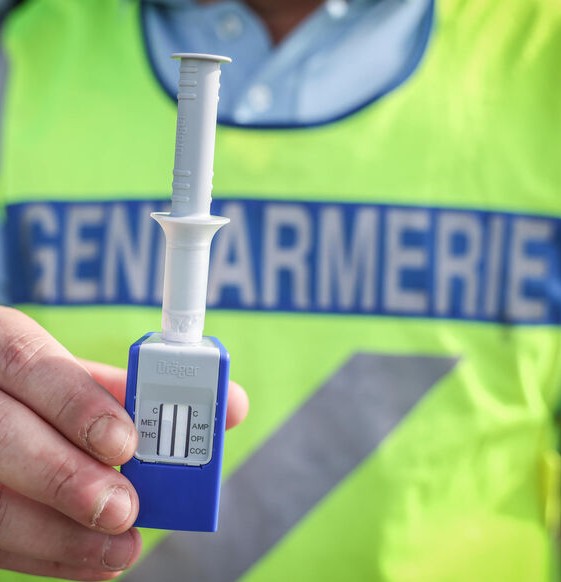
Consequences of the test: licence suspension and administrative proceedings
The period following a positive test follows a specific timeline, and the time limits involved directly affect the driver’s rights.
The administrative procedure that follows
Following the check, two courses of action may follow: an administrative procedure relating, in particular, to the driving licence, and legal proceedings concerning the offence. The rules and time limits for each are separate.
A letter inviting the driver to submit written comments is then sent, followed by a summons to a hearing. Given the potential consequences for the driving licence and the technical nature of the procedure, it may be advisable to seek the assistance of a solicitor specialising in road traffic law, particularly if the driver is considering challenging the stop or the procedure.
The only truly effective protection
No invoice, no certificate of compliance and no argument made in good faith can guarantee an acquittal following the 2023 ruling. To date, the only way to avoid any risk remains to refrain from driving after consuming CBD.
Opting for products certified as having no detectable THC – known as ‘broad-spectrum’ or ‘isolate’ products – offers no guarantees: even in such cases, no label can guarantee a negative result in a saliva test, and you should therefore exercise caution before getting behind the wheel.
CBD and control
- A driving licence may be withheld for a maximum of 120 hours; after this period, the holder may demand its return.
- A solicitor specialising in traffic law can assist you as soon as the positive test result is confirmed.
- The only reliable safeguard is still not to drive after consuming any CBD.
Is CBD banned whilst driving?
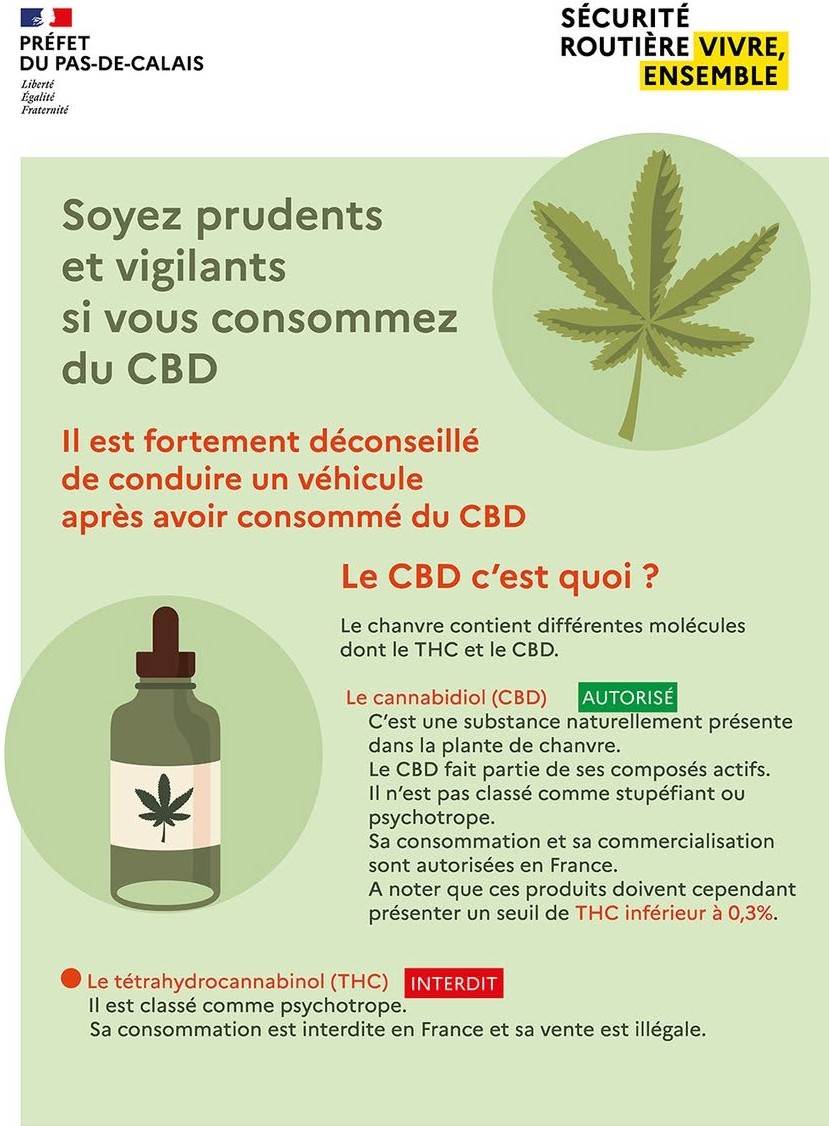
In fact, the consumption of CBD is legal in France and is in no way considered a narcotic. The situation should therefore not be presented in legal terms as ‘CBD is banned whilst driving’, as this would be inaccurate. The issue is rather this: ‘Consuming a legal CBD product may result in the presence of THC in the body’.
However, French law criminalises driving after using a substance classified as a narcotic, without requiring a minimum THC level to constitute an offence. It is this distinction that explains the particular situation of CBD users.
To summarise the situation regarding CBD in France:
Is CBD legal in France?
Yes, subject to the applicable regulatory conditions*.
Can legal CBD contain THC?
Yes, within the limits set out in the regulations, namely a THC content of less than 0.3 per cent.
Can you test positive for THC after taking CBD?
Yes. Despite the low THC content in CBD flowers, it can still be detected by tests.
Is there a legal THC limit that can be used to distinguish between legal CBD and illegal cannabis when driving?
No, according to the case law of the Court of Cassation, THC is classified as a narcotic, regardless of the dose.
Can the driver rely on the legality of CBD?
No, that alone is not sufficient to automatically rule out the offence.
Does the amount of THC absorbed play a decisive role in detection?
No, according to case law, it is the presence – not the quantity – that determines whether a substance is detected and whether an offence may have been committed.
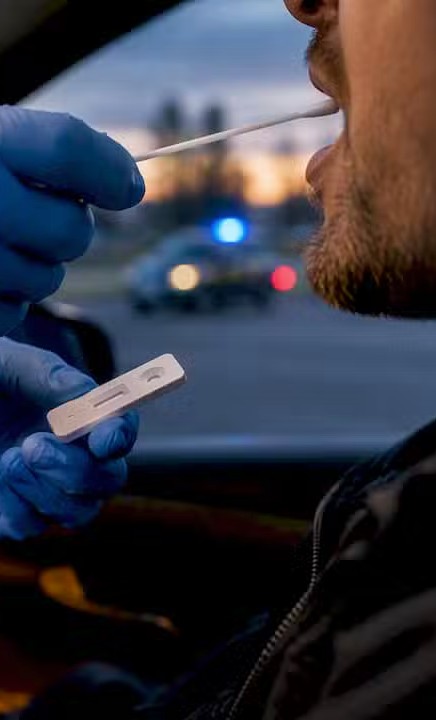
CBD and driving: a few precautions to take in view of the risk of being stopped for a test
The use of CBD requires particular caution for those who regularly drive. In France, as mentioned previously, the issue does not lie with the legal status of CBD itself, but with the possible presence of THC in the body. Some hemp-based products may indeed contain traces of THC within the limits permitted by the regulations. However, on the road, current regulations do not provide for a tolerance threshold that would allow a driver to be considered ‘clear’.
The key point to bear in mind is therefore simple: a legal CBD product can result in a positive THC test, and the fact that you have consumed a legal product is not sufficient to rule out an offence.
Do not drive after consuming a product containing THC
As a precaution, you should avoid driving after consuming a CBD product that may contain THC. Article L.235-1 of the Highway Code prohibits driving after using a substance classified as a narcotic where a saliva or blood test confirms such use.
The Court of Cassation has repeatedly confirmed that this rule also applies where the THC detected may have originated from the consumption of a legal CBD product. The legal status of the product consumed and the small amount of THC that may have been ingested do not, therefore, in themselves, rule out the risk of criminal liability.
Do not rely on a ‘guaranteed’ waiting time
It is tempting to look for a time frame after which it would be safe to drive, for example a few hours or the day after consuming alcohol. However, there is no universal legal time frame that allows us to say with certainty that a driver will necessarily test negative in a breathalyser test, even though time does play a part.
The length of time for which THC can be detected depends, amongst other things, on the product consumed, the quantity, the frequency of consumption and individual factors. Above all, however, French law does not specify a time limit beyond which a user can automatically consider themselves authorised to drive.
It is therefore preferable not to present time limits as guarantees of legal certainty.
Check the product’s ingredients carefully
Consumers who drive regularly would be well advised to know exactly what the products they buy contain and where they come from. The label should not be the only source of information: where possible, it is useful to consult the product or batch analysis, particularly to check its THC content. This reinforces the idea that a local producer offers the best guarantee of traceability.
Particular attention should be paid to flowers, resins and so-called ‘full-spectrum’ extracts, which may contain traces of THC. Conversely, some products formulated using CBD isolate are sometimes marketed as being THC-free. Whilst this difference helps to reduce the risk, it should not be treated as an absolute guarantee: the manufacturer’s claim that a product is THC-free does not in itself constitute legal protection in the event of a positive test result.
Keep your proofs of purchase and test results
It is a good idea to keep the product packaging, the batch number, the invoice and, where available, the certificate of analysis.
These documents can help establish which product was purchased and what its stated composition was. However, they do not automatically render the behaviour lawful where a biological analysis confirms the presence of THC. Their value is primarily documentary, particularly in the event of a dispute or legal proceedings.
Knowing your rights if you test positive
A positive saliva test is not the same as a final court ruling. The regulations provide for a verification procedure and offer the driver certain options for challenging the result or having it reviewed.
During the check, the driver must, in particular, be informed of the possibility of requesting an expert assessment or a technical inspection in accordance with the provisions of the Highway Code. It is therefore important not to overlook this step and to keep the documents provided by the police in a safe place.
In the event of notification of a positive result, specific time limits apply for requesting an expert opinion or a technical examination. A person facing such proceedings may therefore be well advised to seek advice from a specialist solicitor at an early stage in order to safeguard their rights and comply with the time limits laid down in the legislation.
The rule of thumb to remember
For a CBD user who drives, caution ultimately hinges on a key distinction: the legality of the product and the legality of driving are two separate issues.
A product may be legally marketed even if it contains a small amount of THC. However, if THC is detected in a driver’s system, road traffic regulations may apply. It is therefore not advisable to regard the permitted THC limit for products as a permissible limit for driving.
To minimise the risk, regular drivers may wish to opt for products whose composition is clearly documented. The most important precaution, however, is still to avoid taking CBD whilst driving after consuming a product that may contain THC.
ValviWeb+
- Articles L235-1↗ and L.235.2↗ of the Highway Code, Légifrance
- Highway Code, Article L.235-1. Légifrance↗
Highway Code, Article L.235-2 → screening and verification. Légifrance↗ - Decree of 13 December 2016 laying down the procedures for screening, Légifrance↗
- Decree of 30 December 2021, authorised varieties of Cannabis sativa L. and delta-9-THC content below 0.30%↗
- Council of State, annulment of the marketing ban, 29 December 2022, No. 444887↗
- Court of Cassation, tolerance limit not applicable to driving, 21 June 2023, No. 22-85.530↗ and 14 November 2023, No. 23-81.500↗